Tile Roof Replacement in the Rancho Equestrian District from $8,000. Sound tile over failed underlayment is the commonest finding on a valley tile roof, and it is a relay, not a replacement. Free inspection and a written quote.
On a Rancho parcel the house is often tile and the outbuildings almost never are. That is two different jobs, and the saving is in doing them on one mobilization rather than in pretending they are the same work. The canopy off Griffith Park is the other factor: leaf litter packs under tile courses and holds damp against the felt.
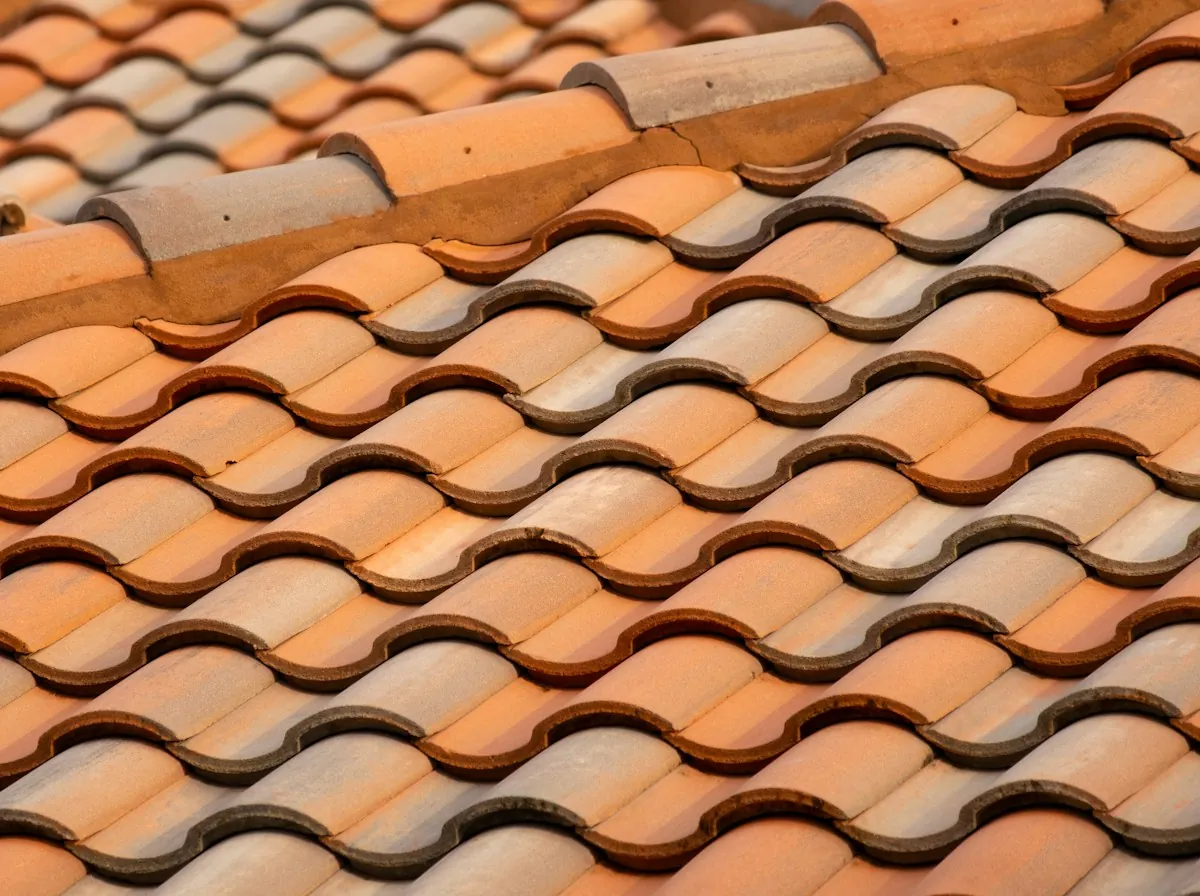
Concrete and clay tile outlives the underlayment beneath it by decades. A tile field that looks perfectly sound from the street can be sitting on felt that has gone brittle and torn, which is why the leak appears with no visible broken tile anywhere near it.


Full tile replacement in Los Angeles runs $15 to $25 per square foot, so $30,000 to $60,000 is a normal figure for one. A lift and relay -- your own tile back down over new underlayment -- is $8,000 to $22,000. That is the single biggest number on this site and it turns on one question: how much of your tile is still good. Expect an itemized quote rather than a single figure, because there is usually more than one roof on the parcel. Long-span outbuildings price differently from the house, and the saving on a Rancho property comes from doing them on one mobilization.
If the tile is sound and only the felt beneath has failed, the relay is the right job at roughly half the cost. We count the salvageable tile before quoting either.
Spalling or widely broken tile, an obsolete profile with no match available, clay rather than concrete, or framing that needs attention once the weight comes off.
Whether the tile itself needed replacing at all. Ask what is wrong with the tile, specifically, and if the answer is about the felt underneath it then you are being quoted the wrong job.
There is usually more than one roof on a Rancho property, and the accessory buildings tend to be the ones in worse condition because nobody looks at them until something stored underneath gets wet. The tree canopy is the other local variable: leaf litter in valleys and gutters holds water against the covering long after the rain stops.
The Rancho Equestrian District is zoned for horse keeping and runs up against Griffith Park, so most properties here have outbuilding roofs as well as a house roof.
This is a replacement company saying so, which is the point. The most expensive mistake in this market is buying the whole roof when the job was a section of it.
A ridge cap loosened in a Santa Ana, an upstand split by movement, a vent boot gone brittle in the heat. Repairs, all of them, in the hundreds -- and all of them regularly offered as proof that the whole roof has had it.
A separate garage, an outbuilding, a rear addition on its own roof, or one slope that failed years ahead of the others. What we will also tell you is when a partial is just a deposit on doing the rest at a second mobilization cost.
When it is, we will say so plainly, because that is the same job as saying the opposite done honestly. What no homeowner should accept is either verdict without being walked through the reasoning.
Most Rancho properties have more than one roof, and a replacement quote that gives you a single figure has quietly decided which ones it includes.
Under the Griffith Park canopy, shingle takes organic damage rather than ultraviolet damage.
Barns, shelters and covered arenas are long-span low slope, and ponding between purlins is the usual finding.
There is very little apartment stock in the Rancho.
Outbuildings are separate structures, so re-roofing the barn does not count toward the house and vice versa.
Laid out 1887. Mixed-era streets, often three roofs a lot.
A 1945-50 grid, and a garage roof out the back.
Studio quarter. Controlled parking, managed loading.
Verdugo slopes. Fire zone at the margins, hard access.
Half lots. All junction, no side yard.
Heavy canopy, high tile share, LADBS permits.
Dense. Small apartment blocks and LADBS permits.
What is worth knowing before you book this.
It might be the right price for the wrong job. Full tile replacement in Los Angeles is $15 to $25 per square foot, so $30,000 to $60,000 is normal for one. But many tile roofs here need a lift and relay instead -- $8,000 to $22,000, because your existing tile goes back down.
Because the leak is under it. Concrete and clay tile outlast the felt beneath them by decades, so the underlayment tears and goes brittle while the tile field above still looks new from the street. That is the commonest tile failure we see and it is not visible from the ground.
A typical single-family Burbank house is a three to five day job once it starts: tear-off and dry-in first, covering after. Tile takes longer than composition, and a lift and relay longer again because the tile is handled twice. Weather moves it, and we will not dry-in a roof we cannot finish.
It depends on the slope. Burbank is Title 24 climate zone 9, and the steep-slope cool-roof requirement applies in zones 10 to 15 -- so a pitched roof here is generally outside it. Low slope is different: that requirement applies in all sixteen zones with no exemption, once more than half the roof area is replaced.
Re-roofing is permitted work. In Burbank it goes through the City of Burbank's Building and Safety Division -- not LADBS, because Burbank is its own incorporated city -- and re-roof permits can be pulled through the city's own portal. Toluca Lake and North Hollywood are City of Los Angeles and do go through LADBS. We pull it either way, and the inspection is your independent check that the specification was followed.
Free inspection, and a written quote against a written scope. Every slope photographed before and after - the set is yours.